
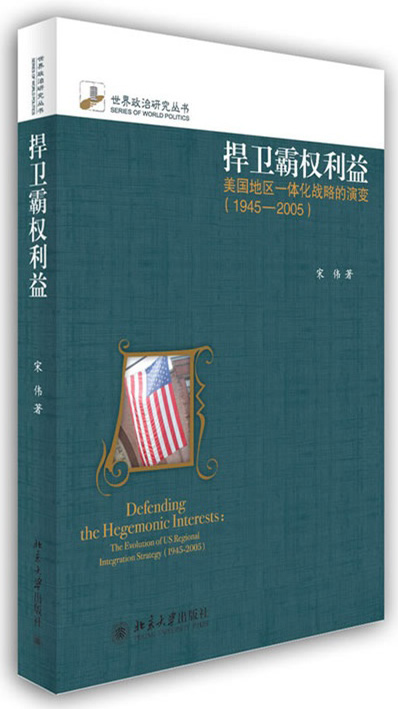
Defending the Hegemonic Interest: The evolution of
Author: Song Wei
Publisher:
Since World War II, the study of
First, it uses the neo-realism paradigm to explore
Second, it gives an insightful explanation of the pattern and process of
At last, I want to point out two questions that the book could address:
First, the author could write on how to properly handle the relationship between power and system. The author explains the evolution of U.S. regional integration strategy by setting power ranking as independent variables and position ranking in the international system as disturbance variables but fails to give a reasonable answer to the question: To what extent is position ranking independent of power ranking.
Second, it could discuss how to apply to the analysis of some rising nations’ foreign policy. This book implies a core theoretical logic that international status shapes a nation’s foreign policy, which is best manifested in the
In a word, Defending the Hegemonic Interest: The evolution of U.S. regional integration strategy (1945-2005) reflects the author’s strong academic background and persistent academic pursuit, demonstrates young scholars’ deep understanding in international relations theory and the effort to put what they have learned into practice and to blend into the mainstream of international academic circles.
Chen Xiaoding is an associate professor at the
The Chinese version appeared in Chinese Social Sciences Today, No. 656, Oct. 15, 2014.
Translated by Yang Xue